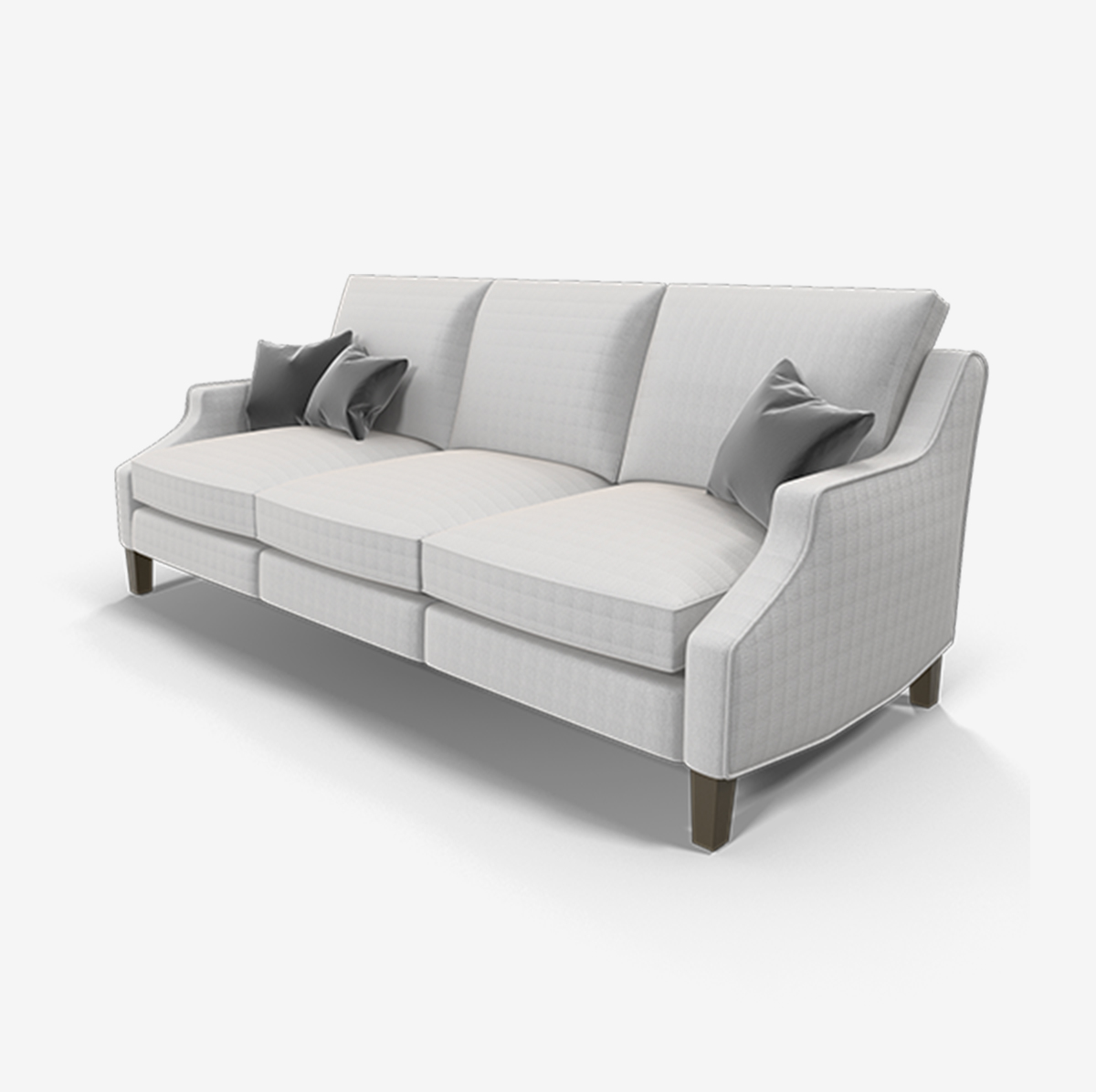
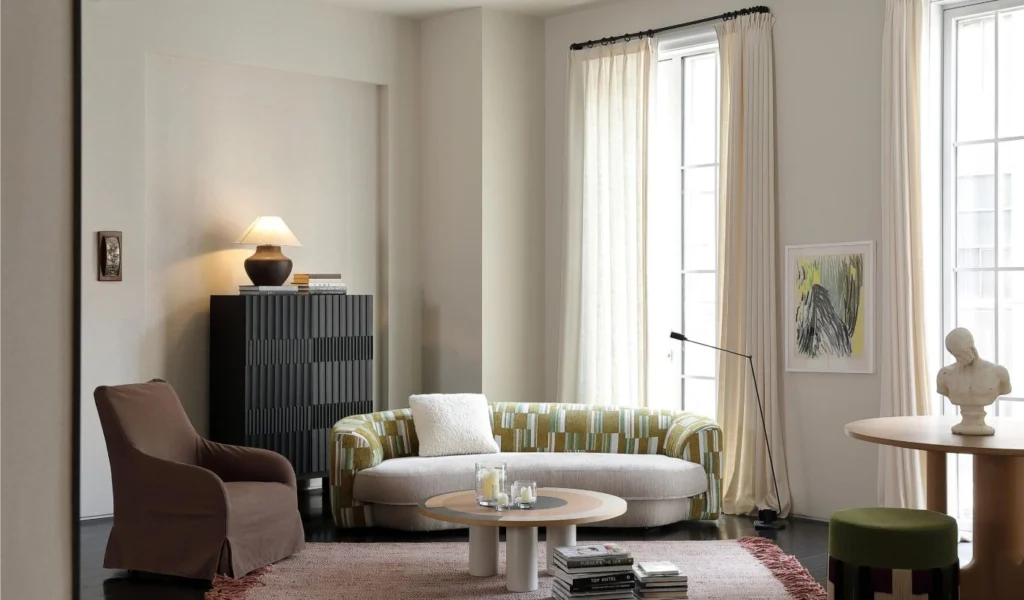
The best sofa fabric for a family is not always the darkest, toughest-looking, or most expensive option. It is the material that suits how the household actually lives: who sits there, whether pets climb up, how often food enters the room, how much sunlight reaches the upholstery, and how willing the owner is to maintain it.
Fabric names alone do not tell the full story. Two sofas described as polyester can feel completely different because of their weave, finish, backing, and construction. A pale fabric may be easier to maintain than expected, while a textured dark fabric may hold pet hair in every loop. The sample and the manufacturer’s care instructions matter more than a generic label.
Short answer: For busy households, begin with a tightly woven upholstery fabric, a forgiving mid-tone color, and clear cleaning instructions. Avoid loose loops when pets have claws, test whether hair releases easily, and inspect a full-size sample in your home’s daylight and evening light before committing.
Start with behavior, not a fabric trend
List what regularly happens on the sofa. Do children snack there? Does a dog sleep against one arm? Is the room used daily or reserved for guests? Does the sofa receive direct afternoon sun? Each answer changes the priorities.
A formal living room may prioritize texture and drape. A family-room sofa may need easy maintenance and a surface that does not snag. An apartment sofa near the dining table may encounter more spills than one in a separate sitting room.
The frame, cushion construction, and scale remain just as important as upholstery. If you are still deciding on overall proportions, start with AYLA’s guide to choosing a sofa for a small living room. Fabric cannot correct a sofa that blocks the room’s main path or does not support the way you sit.
What makes a sofa fabric family-friendly?
Family-friendly upholstery usually combines five qualities:
- A weave that resists obvious snagging
- A color or pattern that does not magnify every small mark
- Cleaning instructions that match your habits
- A hand feel that remains comfortable against skin
- A surface that works with the household’s pets, sunlight, and frequency of use
No fabric is completely maintenance-free. “Performance” can describe different technologies and standards, so ask what the term means for the exact textile. Confirm the approved cleaning method, whether a protective treatment is built into the fiber or applied to the surface, and whether using an unapproved product affects the warranty.
Tightly woven fabrics: a practical starting point
A tight, smooth weave is often easier to live with than an open or heavily looped texture. Crumbs stay closer to the surface, pet claws have fewer loops to catch, and a vacuum attachment can move across it more easily.
Inspect the sample from several angles. Bend it gently to see how much the backing shows through. Run a fingernail lightly across the surface to identify loops or raised yarns. If you have a pet, place a small amount of clean shed hair on the sample and see whether it brushes away or embeds in the texture.
Tight weave does not automatically mean stiff. Many upholstery fabrics balance a smooth surface with a soft hand. Sit on the actual sofa when possible, because cushion shape and fabric tension change how the material feels at full scale.
Microfiber and microsuede
Microfiber and microsuede are known for a fine, dense surface and are often considered for active households. The short fibers can feel soft while limiting large loops that catch claws. Hair may be easier to vacuum from some versions than from chunky woven materials.
However, the surface can show directional marks where the pile is brushed one way or another. Oils and certain spills may also appear differently depending on color and finish. Review the care code and test an inconspicuous sample using only the approved method.
Choose microfiber because its feel and maintenance suit you—not because the category name promises universal stain resistance.
Polyester and blended upholstery
Polyester appears in many upholstery fabrics and is frequently blended with other fibers to adjust softness, texture, and performance. It can offer a wide range of looks, from smooth weaves to velvet-like surfaces.
The fiber content is only one part of the decision. Compare the density of the weave, surface texture, colorfastness information supplied by the manufacturer, and cleaning code. Two polyester blends may perform very differently in the same home.
Ask to see larger samples whenever possible. A small swatch can hide a strong texture repeat or color variation that becomes obvious across an entire sectional.
Leather and leather-like surfaces
Leather can be appealing for households that prefer a wipeable surface and a material that develops character. Hair often sits on top rather than becoming embedded. At the same time, claws can scratch the surface, and different leather finishes react differently to moisture, sunlight, and conditioners.
Understand whether you are comparing protected leather, more natural aniline-style leather, or a synthetic alternative. Each has a different feel and maintenance expectation. Ask what products are approved and whether scratches are considered damage or part of the intended patina.
Place leather away from intense heat sources and evaluate how direct sunlight reaches the room. If you want a pristine, uniform appearance for years, discuss that expectation before choosing a finish that is designed to age visibly.
Velvet and performance velvet
Velvet brings depth and rich color to a room, and some modern upholstery velvets are designed for substantial everyday use. The pile can disguise minor variation, but it can also show pressure marks, direction, and pet hair.
Stroke the sample in both directions and view it under daylight and warm artificial light. The shade may change dramatically. Test whether lint and hair release with a fabric brush or vacuum attachment.
If the household expects a perfectly uniform surface at all times, velvet may require more grooming than desired. If changing highlights and a tactile surface are part of the appeal, it can be a compelling family-room choice when the specific fabric’s care requirements are understood.
Bouclé and highly textured fabrics
Bouclé and nubby textiles create visual warmth, but their loops and texture need careful evaluation in homes with cats or dogs. Claws may catch, crumbs can settle into the surface, and hair can be more visible or difficult to remove.
That does not make every textured fabric unsuitable. Some have small, dense loops and robust construction. Others are better used on a chair in a lower-traffic area than on the household’s primary sofa.
Bring the decision back to the sample. If the texture is difficult to clean during a simple test, it is unlikely to become easier after the sofa enters a busy home.
What colors are easiest to live with?
Mid-tone colors, heathered yarns, and subtle patterns often disguise everyday variation better than very dark or very light solids. The best color also depends on the pet. White hair can be obvious on charcoal fabric, while dark hair may stand out on cream upholstery.
Match the fabric’s undertone to flooring, walls, and nearby wood. A neutral sofa can lean warm, cool, green, pink, or gray. Take the sample home and view it morning, afternoon, and evening before making the final decision.
Do not assume a dark fabric is automatically easier. Dark surfaces can show lint, dust, fading, and pale pet hair. Choose the tone that works with the room and disguises the marks your household actually creates.
Read the upholstery cleaning code
Many upholstery labels include a cleaning code. The manufacturer or retailer should explain the instructions for the specific product. Common codes may indicate water-based cleaning, solvent-based cleaning, either method, or vacuum-only care.
Treat the code as a boundary, not a suggestion. Household sprays, steam machines, or improvised mixtures can leave rings, change the texture, or affect protective finishes. Keep the original care information after purchase.
For routine care:
- Vacuum gently using the appropriate attachment.
- Rotate and fluff removable cushions as recommended.
- Blot spills promptly rather than rubbing.
- Test approved cleaners in a hidden area.
- Use professional cleaning when required by the care instructions.
If washable covers are important, confirm which pieces are removable and whether machine washing is actually permitted. A zipper alone does not mean a cover belongs in a washing machine.
Ask about durability without relying on one number
Some fabric specifications include abrasion-test results. These can help compare textiles tested under the same method, but a higher number does not predict every form of wear. Seams, cushion construction, pilling, snagging, sunlight, cleaning habits, and the household’s use all affect longevity.
Ask whether the fabric is intended for residential upholstery and request information about pilling, colorfastness, and care. Then combine the specifications with a physical inspection and realistic sample test.
The most durable material on paper is not a good purchase if the family dislikes its feel and replaces it early. Comfort and maintainability belong in the same decision.
Test fabric samples at home
Bring home the largest approved samples available. Place them where the sofa will sit and observe them for several days.
Check:
- Daylight and evening color
- How the fabric looks beside flooring and walls
- Whether pet hair releases easily
- Whether the texture catches jewelry or claws
- How quickly the surface recovers after being pressed
- Whether the material feels comfortable in warm and cool conditions
Do not perform destructive tests on a borrowed showroom sample. Ask whether a separate test swatch is available and follow the retailer’s instructions.
You can compare upholstery choices in person at the AYLA Home Collection showroom in San Jose. Bring room photos, paint or flooring samples, and pictures of any furniture that will remain.
Balance fabric choice with sofa construction
Upholstery receives attention because it is visible, but the frame, suspension, cushions, and tailoring determine much of the sofa’s comfort and long-term shape. Sit in your normal position for more than a few seconds. Try the corner, center, and end seats.
Check whether cushion covers are removable, whether cushions can be rotated, and what the warranty covers. A family-friendly sofa should be maintainable as a complete system.
Browse AYLA’s current sofa collection to compare silhouettes and dimensions before visiting. Then verify the exact upholstery options, availability, and care instructions for the model you prefer.
For compact rooms, AYLA’s small-space furniture guide can help you coordinate the sofa with storage, tables, and walking space rather than evaluating it in isolation.
Frequently asked questions
What sofa fabric is best for dogs?
A tightly woven fabric with minimal loops is a sensible place to start. Test whether the dog’s hair is visible and easy to remove, and consider how claws may contact the surface. The exact weave and care instructions matter more than a generic fiber name.
Is a light-colored sofa practical for a family?
It can be. A light heathered or textured fabric may disguise variation better than a very dark solid. Practicality depends on the cleaning code, protective finish, household habits, and whether replacement covers are available.
Is leather better than fabric for pets?
Leather can release hair easily, but claws may scratch it. Fabric may hide scratches better but can trap hair depending on the weave. Choose based on the pet’s behavior and your tolerance for patina, grooming, and maintenance.
What does performance fabric mean?
The term can refer to different fibers, finishes, or test results. Ask what performance properties are documented for the specific textile and which cleaning products are approved.
Should sofa cushions have removable covers?
Removable covers can help with maintenance, but do not assume they are machine washable. Follow the manufacturer’s cleaning code and care instructions.
Choose the fabric you can enjoy, not fear
The best sofa fabric for families makes the room easier to live in. It should feel comfortable, suit the household’s pets and routines, and have care instructions you are willing to follow.
Visit AYLA Home Collection in San Jose to compare full-size sofas and fabric samples under real light. Seeing the weave, color, scale, and tailoring together is far more useful than choosing from a small online square. If you have a particular room, pet, or maintenance question, contact AYLA before your visit and bring home the details you need to make a confident, practical decision.