Thanksgiving has a way of turning an ordinary dining area into the busiest room in the house. The table needs to hold more place settings than usual, serving dishes arrive from the kitchen, and guests move between conversations, drinks, and second helpings. A dining table that feels comfortable for everyday meals can suddenly feel crowded when the room is asked to do all of that at once.
Choosing a Thanksgiving dining table is not only about finding enough seats. You also need to account for chair width, space behind occupied chairs, the path from the kitchen, and where food will be served. The best plan protects everyday comfort while giving you a realistic way to expand for special gatherings.
Short answer: Count the people you host most often, allow roughly 24 inches of table edge per diner, and leave at least 36 inches between the tabletop and a wall or fixed cabinet. Use more clearance on active walkways. If your holiday group is larger than your everyday household, an extendable table is usually more practical than a permanently oversized one.
Start with the guest list you actually expect
Before comparing styles, write down three numbers:
- The number of people who use the table every day
- The number you host several times a year
- The maximum number you expect for Thanksgiving
These numbers do not always point to the same table. A household of four that hosts eight people once a year may be better served by a six-seat extension table than a fixed eight-seat table. The smaller footprint keeps everyday routes open, while the leaves provide extra capacity when needed.
Do not count only adults. Children may use narrower chairs, but high chairs and booster seats can take more floor space than expected. Consider whether anyone needs an armchair, easier access at the end of the table, or room for mobility equipment.
If you are unsure which dimensions correspond to your guest count, begin with AYLA’s detailed dining table size guide. It compares common four-, six-, and eight-seat starting dimensions and explains why the base and chair design can change usable capacity.
How large should a Thanksgiving dining table be?
Use common dimensions as a shortlist, not a guarantee. Table legs, pedestals, aprons, and chair width all affect the number of comfortable seats.
- Four people: approximately 42–48 inches in diameter for a round table, or about 48 inches long for a compact rectangle
- Six people: approximately 54–60 inches in diameter for a round table, or about 60–72 inches long for a rectangle
- Eight people: approximately 84–96 inches long for a rectangular table
Allow about 24 inches of table edge per person as a planning number. Wider upholstered chairs may require more. End seats also need sufficient knee room without colliding with table legs or a trestle base.
Table width matters during holiday meals. A narrow table may seat everyone but leave little room for platters, candles, and serving bowls. A very wide table provides display space but can make conversation and passing food less convenient. For many rectangular tables, a width around 36–42 inches is a useful starting range.
Browse AYLA’s current dining tables with the exact product dimensions beside your room measurements. Seat labels are helpful, but the numbers determine the fit.
Measure the complete dining zone, not only the tabletop
Measure the usable floor area at its narrowest points. Exclude space occupied by fixed cabinetry, a sideboard that must remain, door swings, radiators, and busy routes between the kitchen and other rooms.
Then subtract the desired clearance from both dimensions. If you want 36 inches on all four sides, subtract 72 inches from the room’s usable length and 72 inches from its usable width. The remaining rectangle is the maximum tabletop zone at that clearance.
For Thanksgiving, identify which side carries the most traffic. The route between the kitchen and table often needs more than the minimum because people will carry hot dishes while chairs are occupied. Aim for 42–48 inches on that side when the room allows it.
Measure from the tabletop edge rather than from the base. Pull a chair out, sit down, and ask someone to walk behind you. This simple test reveals more than an empty floor plan.
Use painter’s tape for a realistic holiday test
Mark the proposed tabletop dimensions on the floor with painter’s tape. Place the chairs around it, including any extra chairs you plan to borrow or bring from another room. Pull every chair into its occupied position.
Next, rehearse the meal:
- Walk from the kitchen to each side of the table carrying an empty platter.
- Open nearby drawers, doors, and appliances.
- Check whether the host can reach the intended serving area.
- Test access to the patio, powder room, and entry.
- Add a temporary surface if drinks or desserts will be served elsewhere.
If the table extends, tape the closed and open footprints in different colors. A design may fit beautifully every day but block a doorway when fully extended. It is better to learn that with tape than after delivery.
Round, rectangular or oval: which shape hosts best?
A rectangular table is often the most efficient choice for six to eight guests, especially in a long dining room. It provides a clear center line for serving dishes and can align naturally with an island, window, or pendant fixture.
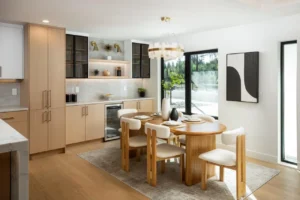
A round table works well in a square or compact room. Everyone has a similar conversation position, and the absence of corners can improve circulation. Very large round tables, however, require significant floor area and can make the center difficult to reach.
An oval table offers much of a rectangle’s capacity while softening the ends. This can help when a doorway or circulation route passes close to the table. A square table feels balanced for four people but is usually less flexible for larger holiday groups.
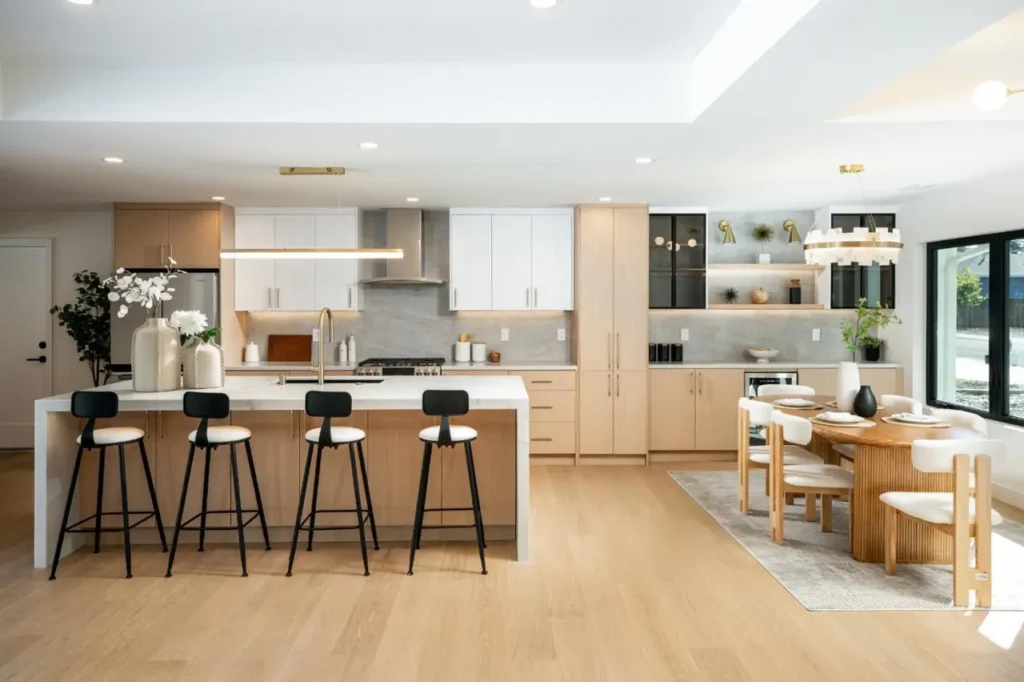
The shape should also support the connected room. AYLA’s guide to making an open living and dining room feel cohesive explains how repeated shapes, materials, and lighting can connect adjoining zones without making them match exactly.
When is an extendable dining table the best answer?
An extendable dining table is useful when your holiday guest list is substantially larger than your daily household. Compare the table in both positions before buying.
Ask these questions:
- Where are the leaves stored?
- Can one person operate the mechanism?
- Do the legs move when the table expands?
- Does the extended position reduce knee room?
- Where will extra chairs be kept?
- Does the extended table still protect the kitchen route?
Some extension systems keep the base centered; others move the legs outward. Neither is automatically better, but the difference affects chair placement. Test every intended seat, especially those near legs and joints.
AYLA’s dining table sets can make chair compatibility easier to evaluate because the proportions are designed to work together. Still confirm arm height, seat width, and the number of chairs that tuck fully under the table.
Plan serving space before adding decorations
Decide whether the meal will be served on the table, buffet-style, or as a combination. If every platter must fit on the tabletop, keep the centerpiece compact and leave an uninterrupted serving zone through the middle.
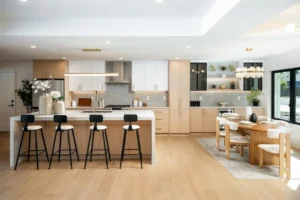
A sideboard or console can hold drinks, desserts, extra plates, and serving pieces. A kitchen island can function as a buffet if the traffic path remains clear. Avoid placing a temporary serving surface where it narrows the route behind chairs.
Holiday decorating should follow the functional plan. Low arrangements preserve sight lines. Battery-operated candles avoid cords crossing walkways. A runner can visually organize the center without occupying as much space as several unrelated objects.
The goal is not to fill the table before food arrives. Leave enough negative space for the meal to feel generous rather than crowded.
Choose chairs for comfort and flexibility
Chair width is one of the most common reasons a table seats fewer people than expected. Measure the widest point, including arms, and check whether the chair can slide past the table legs.
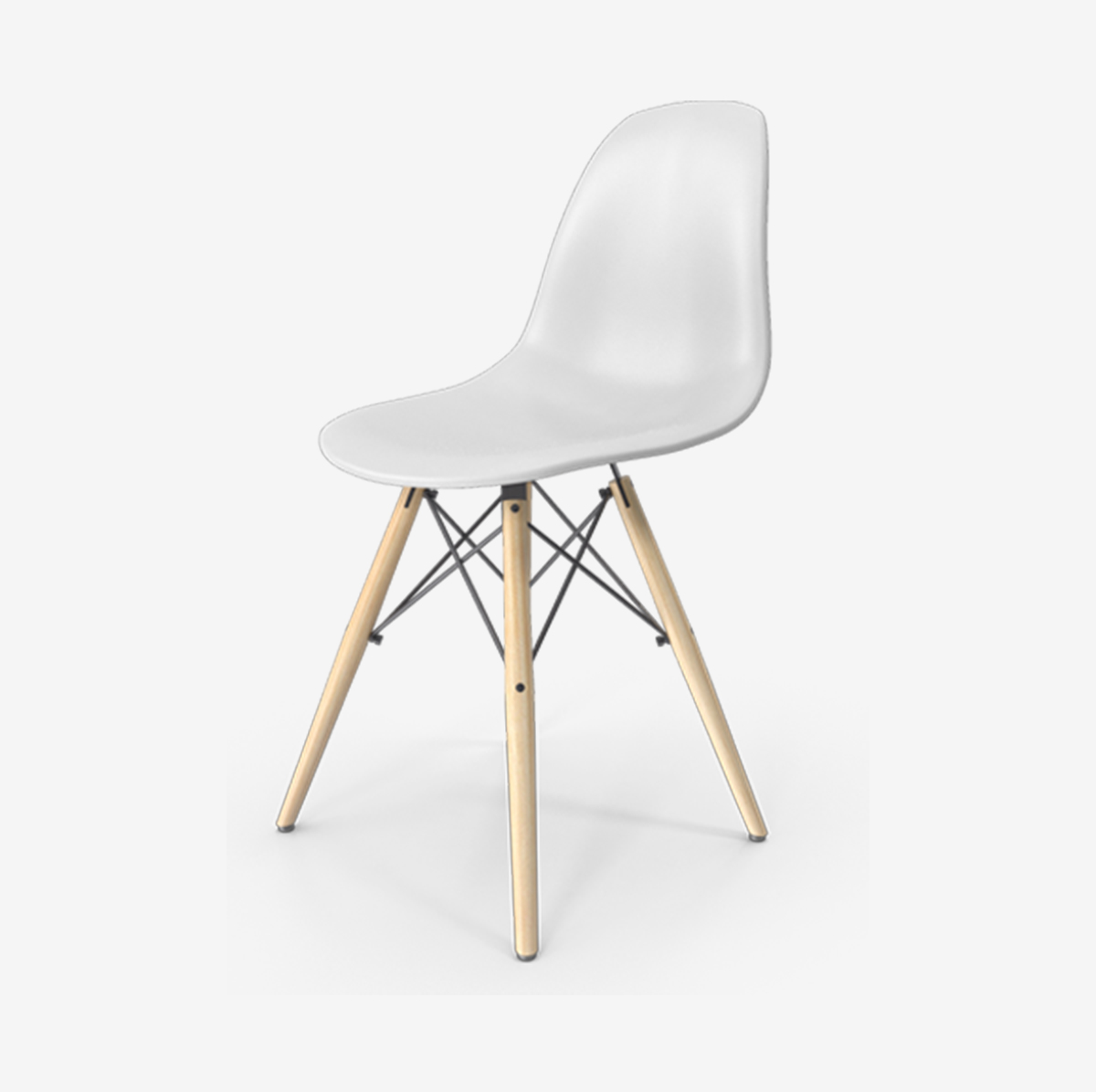
For flexible holiday seating, consider using armless chairs along the sides and a pair of more substantial chairs at the ends. Benches can accommodate children and may tuck neatly under some tables, but they make it harder for an inside guest to stand up during the meal.
Seat comfort also matters during a long dinner. Test the seat depth, back angle, and cushion support. Confirm that the chair height leaves comfortable room beneath the tabletop and apron.
Do not introduce extra chairs for the first time on Thanksgiving morning. Place them around the table in advance so you can identify wobbles, tight corners, or blocked paths.
Protect the delivery timeline
Holiday furniture purchases need a delivery plan. Confirm whether the item is currently available, how it is packaged, and whether assembly is required. Measure the front entrance, hallway, stair turns, elevator, and dining-room doorway.
Ask whether the tabletop and base arrive separately. A table can fit the room and still be difficult to bring through the final turn. Allow time after delivery to inspect the surface, learn the extension mechanism, and adjust chair placement.
When visiting the AYLA Home Collection showroom in San Jose, bring room dimensions, doorway measurements, photos of the surrounding space, and the width of any chairs you plan to keep. This makes the showroom comparison much more precise.
Thanksgiving dining room checklist
Before making a final decision, confirm:
- Everyday and holiday guest counts
- Exact tabletop dimensions in closed and extended positions
- At least 36 inches of basic clearance around the table
- Additional clearance along active serving routes
- Chair width, depth, arm height, and knee room
- Space for platters, drinks, and extra place settings
- Location of extension leaves and extra chairs
- Door, drawer, and appliance clearance
- Delivery path and expected timing
- Lighting centered over the actual table position
Frequently asked questions
How many people can sit at a 72-inch dining table?
A 72-inch rectangular table commonly accommodates six people and may fit more with slim chairs and suitable leg placement. Confirm approximately 24 inches of table edge per guest and test the actual chairs and base.
Is 36 inches enough behind a dining chair?
It is a practical minimum starting point between the tabletop and a wall or fixed object. Use more space where people need to walk behind seated guests, particularly on the route from the kitchen.
Should I buy an eight-seat table for occasional holidays?
Not necessarily. If your daily household is smaller, a six-seat extension table may preserve everyday circulation and still expand for eight. Compare both footprints inside the room.
Can I mix dining chairs for Thanksgiving?
Yes. Keep the seat heights compatible and repeat a color, material, or shape so the combination feels intentional. Place wider or armed chairs where they have the most clearance.
How early should I choose holiday furniture?
As early as practical. Availability, delivery, assembly, and room testing all require time. Confirm the current fulfillment estimate for the specific item rather than relying on a general assumption.
Create room for the people and the meal
The best Thanksgiving dining table is not simply the largest one that fits through the door. It supports conversation, gives chairs room to move, protects the kitchen route, and works for your household after the holiday is over.
Visit AYLA Home Collection in San Jose with your guest count, room measurements, photos, and delivery-path dimensions. Comparing tables and chairs together can help you create a dining area that feels comfortable for everyday meals and ready when everyone gathers.